The Complete Vaha Case
The Market Gap
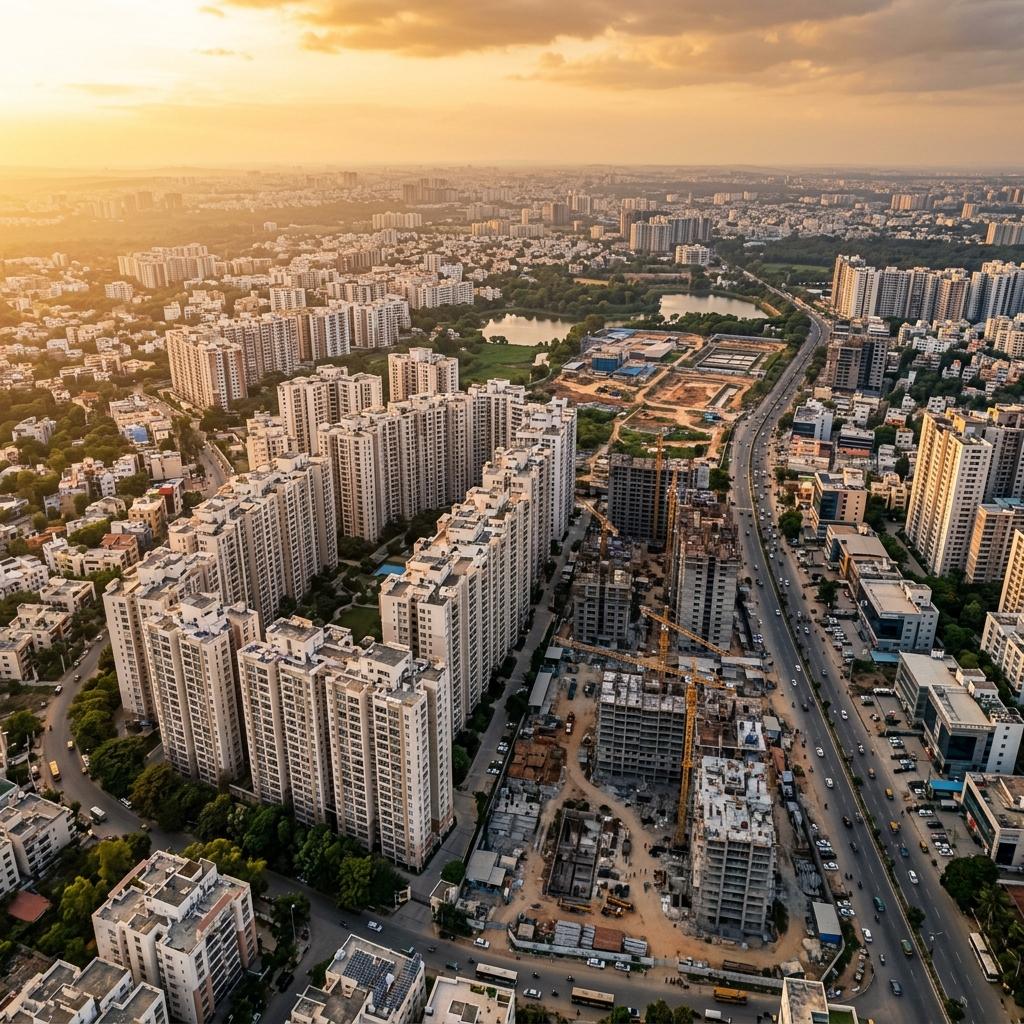
Bengaluru's water crisis is structural, not seasonal.
WELL Labs estimates citywide demand at 2,632 MLD against Cauvery piped supply of 1,460 MLD. The city has 3,500+ decentralised sewage treatment plants (STPs) that could support reuse of up to 615 MLD.
The opportunity sits in the 300 MLD apartment surplus wedge. Large enough to matter, narrow enough to model.
Source: WELL Labs Urban Water Balance Report
Why Bengaluru, Why Now
The mandate exists. The shortage is here. The buyer demand is getting larger.
Indian law already requires large apartment buildings to treat sewage on-site. After internal reuse, BWSSB now allows up to 50% of that treated water to be sold for non-potable applications.
BWSSBConstruction is the first buyer. Data centers come next, with cooling water bills that can exceed $1M per year per site in a water-stressed city.
KSPCBRoughly half of Bengaluru's 13,900 borewells have run dry. Tanker prices have doubled. The reuse network now matters as hard infrastructure, not a sustainability side note.
BWSSB & BAFWhy This Has Not Been Solved
The problem is not treatment. It is what happens after the water is treated.
Large apartment buildings are already required to treat sewage on-site. After internal reuse, the surplus has nowhere reliable to go.
Buyers ask whether they can rely on what is being delivered, whether it matches the intended use, and who is accountable if something goes wrong.
Even when a source and buyer are nearby, there is no default, trusted, repeatable route that moves treated water from apartment sewage treatment plants (STPs) to site sumps.
Supply, demand, and policy all exist. But there is no standardized layer handling quality documentation, dispatch, chain-of-custody, and payment flow.

How Vaha Works
Surplus water from sewage treatment plants (STPs) becomes a verified local supply loop.
Think of Vaha like Airbnb for treated water. We do not own the water, the trucks, or the plants. We create the trusted protocol that lets these systems transact cleanly.
Identify apartment sewage treatment plant (STP) surplus and pair it with nearby construction demand. Proximity-first routing keeps costs inside the economic window.
Issue a Water Acceptance Pack before dispatch so the buyer can review the source, intended use, and quality documentation.
Use existing tanker operators and existing site workflows. No new infrastructure. No owned fleet.
The Water Acceptance Pack
How trust becomes an operating workflow.
Every delivery carries a full documentation trail. The buyer reviews and signs off before a single litre moves.
Unit Economics
Start with the big savings. Then show the route math.
One construction project can save about $50K. One data center can save about $500K per year on cooling water. Underneath that, every 12,000L load gives Vaha about a $4 margin.
Validation
The barrier is clear, the route is clear, and the pilot corridor is active.
Vikas Brahmavar of Boson Whitewater confirmed that buyer trust in water quality is the core barrier. That is exactly what Vaha's Water Acceptance Pack is designed to solve.
Boson WhitewaterSite managers do not switch just because water is cheaper. They switch when they believe the source is trustworthy and the handoff is properly documented.
Field interviewsWELL Labs found demand is significantly larger than decentralised supply. Active supply-side meeting scheduled with Vaishnavi Orchids apartment complex on the pilot corridor.
WELL LabsThe transaction is already possible. It is just not yet organized into a repeatable local market.
Pilot Plan
One corridor. One proof point. One repeatable loop.
The first pilot corridor is the Bellandur to Kadubeesanahalli stretch of Outer Ring Road. This geography concentrates apartment supply, active construction demand, and short route distances in one place. Vaishnavi Orchids is the active supply-side meeting on this corridor.
The source is real, compliant, and consistently producing surplus treated water.
The buyer already uses non-potable tanker water and has a real receiving workflow on site.
The tanker partner can complete the route inside the economic window.
The Water Acceptance Pack is strong enough for pre-dispatch signoff.
The payment and proof-of-delivery flow makes the next route easier, not harder.
Risk and Control
The core risk is not water scarcity. It is repeatability failure.
The central risk is that trust failures, route inconsistency, or weak documentation make repeatability impossible. That is why the first version is designed around control rather than breadth.
Staying within non-potable use removes the most demanding quality thresholds and keeps the regulatory path clear.
Keeping routes local preserves the economic window and reduces the risk of quality degradation in transit.
Every source must have a recent, compliant lab report before a route is created. No report, no dispatch.
The buyer reviews the Water Acceptance Pack and signs off before the tanker moves. This is the trust checkpoint.
A rejected load is not routine friction. It triggers a root-cause review before the next dispatch is permitted.
Sources
Every major claim has a visible source trail.
Bengaluru does not need to wait for more water. It needs a better way to move the water it already has.